Are Grounding Bands as Good as Mats?
FREE Shipping On All Orders Over £70
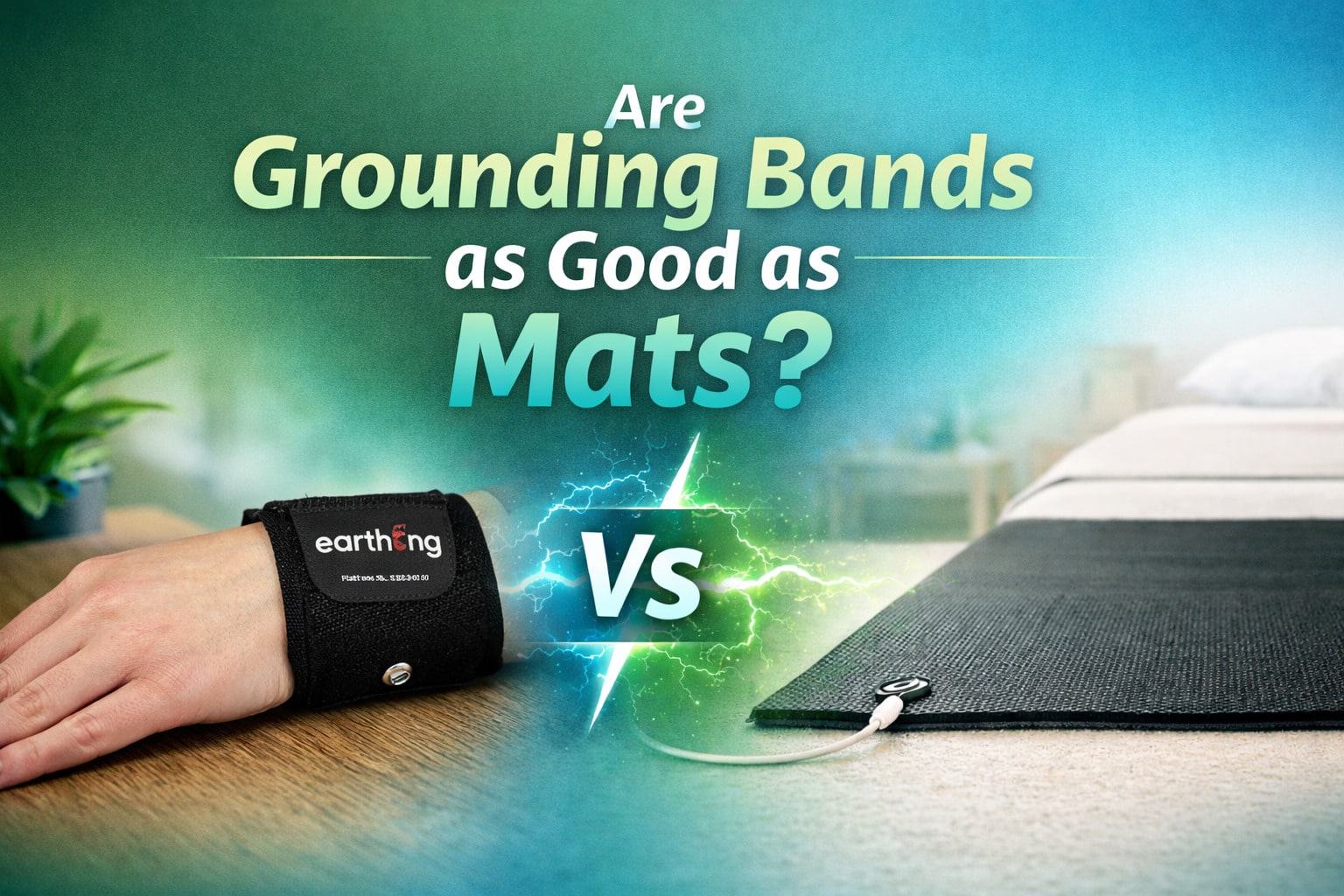
Are Grounding Bands as Good as Mats?
There’s a lot of discussion around whether grounding bands are as effective as grounding mats. Some people prefer the simplicity and portability of a grounding band, while others find that a grounding mat fits better into their daily routine.
In reality, both options can be effective — the best choice often comes down to how, when and where you plan to use grounding. Below, we’ll explore what grounding (also known as earthing) is, how bands and mats work, and the key differences between them to help you decide which option may suit you best.
Grounding, sometimes referred to as earthing, is the process of connecting the body to the earth’s natural electrical charge. This can happen naturally by walking barefoot on grass, sand or soil. Some surfaces being more effective than others, or artificially through grounding products such as mats or bands.
When you ground yourself, your body is able to equalise with the earth’s electrical potential. Many people find grounding feels calming and restorative, which may be why spending time barefoot outdoors has felt beneficial for generations. Understanding the most effective grounding surfaces helps explain why certain natural environments feel more grounding than others. More recently, grounding products have made it possible to recreate this connection indoors in a consistent and convenient way.
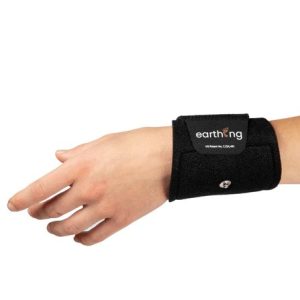
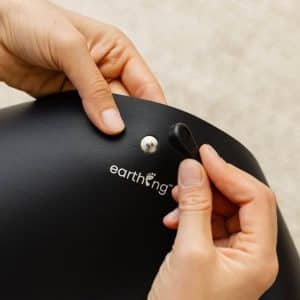
Grounding bands are typically made from stretchy, conductive fabric and are worn around the wrist, ankle or foot. They connect to the earth via a grounding cable and can be easily removed if you need to move around.
Because they provide a single point of contact, grounding bands are often used to target specific areas such as the wrists, ankles, knees or elbows. Once grounded, the entire body is able to equalise electrically, even though contact is made at one point.
Grounding bands are also a discreet option. For example, in an office environment where placing bare feet on a grounding mat may feel impractical, a grounding band allows grounding to take place subtly without drawing attention.
They are lightweight, affordable and highly portable, easily fitting into a bag or pocket. For those on a budget or looking for a simple way to introduce grounding into their routine, bands can be a convenient starting point.
Grounding mats are larger grounding surfaces designed to be placed under the feet, on a desk, on a chair or even on a bed. They connect to the earth through a grounding cord and a properly grounded socket.
Because of their size, grounding mats offer a larger contact area, which can provide more consistent grounding. They are particularly popular for desk-based work, as they can be placed under the feet or used on the desktop so the hands and wrists remain grounded while typing.
Grounding mats are very versatile. They can be rolled up and taken between home and work, used while relaxing on the sofa, or placed on the bed for rest. Some people also use mats during sleep, ensuring skin contact where possible.
While mats are generally more expensive than bands, they are often chosen as an entry product because of their flexibility and ease of use throughout the day.
People choose grounding for a variety of reasons. While individual experiences vary, grounding is commonly associated with the following supportive effects:
Reduced Stress and Anxiety – Grounding may help regulate the autonomic nervous system, encouraging a calmer, more balanced state — similar to how many people feel after time spent barefoot at the beach or in nature.
Improved Sleep – Many people report better sleep when grounding regularly, possibly due to reduced stress levels and a greater sense of relaxation before bed.
Reduced Inflammation – Some research suggests grounding may help reduce inflammation by supporting the body’s natural electrical balance.
Pain Relief – Grounding is often used as a supportive practice by those experiencing aches, stiffness or discomfort, particularly when used consistently.
Improved Circulation – Grounding has been linked to improved blood flow in some studies, which may benefit overall circulation.
Increased Energy – By supporting better sleep and reduced stress, grounding may help people feel more energised during the day.
Hormonal Balance – Some people find grounding supports hormonal balance during times of change, such as PMS or menopause.
Support Against EMFs – Grounding may help dissipate electrical charge built up from exposure to electromagnetic fields (EMFs) emitted by everyday electronic devices.
Grounding should be viewed as a supportive wellness practice rather than a medical treatment, and experiences can differ from person to person.
Grounding can be used by people of all ages, from children to older adults. Many of us instinctively recognise how good it feels to walk barefoot on grass or sand — grounding simply recreates that natural connection indoors.
Whether you’re looking to feel calmer, sleep better, or introduce a simple wellness habit into your routine, grounding may be worth exploring.
So, are grounding bands as good as mats?
Both grounding bands and grounding mats can be effective, but they serve slightly different purposes. Mats typically provide a more consistent connection due to their larger surface area, making them well suited for desk work, relaxation or longer sessions.
Grounding bands, on the other hand, are more portable, affordable and discreet. They can be ideal for short sessions, targeted use or situations where mobility is important.
Ultimately, neither option is better for everyone. The right choice depends on your lifestyle, preferences and how you plan to use grounding. Some people even choose to use both, depending on the situation.
Yes, grounding bands can be effective when they maintain consistent contact with the skin and are properly grounded. However, their effectiveness may vary depending on movement and positioning.
Grounding mats often provide more consistent grounding due to their larger surface area, but effectiveness ultimately depends on how the product is used.
Yes, grounding mats can be used in both home and office environments, provided there is access to a grounded socket.
Yes, grounding bands generally require direct skin contact to work effectively.
Some grounding mats can work through light contact or proximity, depending on their design, but closer contact typically improves effectiveness.
Yes, grounding mats are safe and do not introduce electricity into the body. They simply connect the body to the earth’s natural electrical potential.