How Long To Walk Barefoot For Grounding?
Explore the Earthing Benefits with Walking Barefoot
Walking barefoot outdoors is one of the simplest and most natural ways to practise grounding (earthing). But a common question is:
How long should you walk barefoot to experience the benefits of grounding?
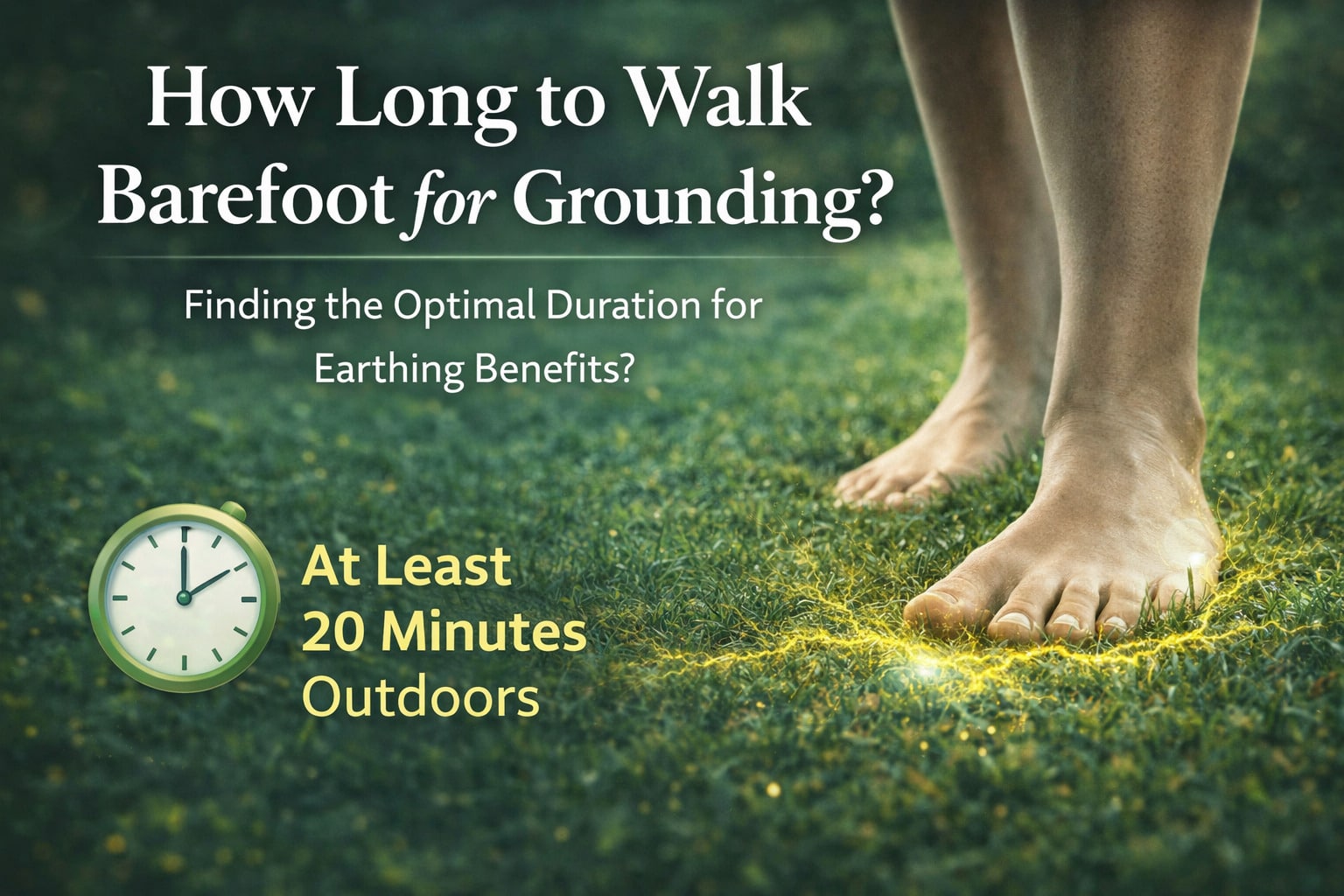
While there is no fixed clinical guideline, most research and practitioners suggest that around 20–30 minutes of direct contact with the Earth is a practical starting point.
In this guide, we explore:
Grounding, also known as earthing, refers to making direct physical contact with the Earth’s surface, allowing electrical exchange between your body and the ground.
The concept is based on simple electrical principles:
This is similar to how buildings are grounded in electrical systems, excess electrical charge is safely discharged into the Earth.
Historically, humans were in constant contact with the ground through walking barefoot, sleeping on natural surfaces and living outdoors. Modern lifestyles, with insulated footwear and indoor environments, have come to reduce this natural connection.
Grounding is thought to support several physiological processes, particularly those linked to inflammation, oxidative stress, and nervous system regulation.
While research is still developing, studies have explored grounding’s potential impact on:
Increased Energy Levels
Some participants in grounding studies reported reduced fatigue after consistent grounding over several weeks. This may relate to improved sleep and reduced stress load.
Reduced Pain and Inflammation
Grounding may help reduce inflammation by neutralising free radicals. A scientific review explains how oxidative stress contributes to cellular damage and inflammation
Reducing oxidative stress may support recovery and pain reduction.
Improved Mood and Mental Wellbeing
Grounding may help regulate the autonomic nervous system, shifting the body toward a more relaxed, parasympathetic state. This may contribute to reduced stress and improved mood.
Immune System Support
Because inflammation and immune function are closely linked, grounding may indirectly support immune balance by reducing inflammatory load.
Cardiovascular Support
Research has shown grounding may improve blood flow by reducing blood viscosity (blood thickness).
Improved circulation may reduce strain on the cardiovascular system, although grounding is not a treatment for heart disease.
You can read more about this in Can Grounding Reduce Heart Disease?
Walking barefoot is one of the most effective ways to ground because it allows direct skin contact with the Earth.
When your bare feet touch natural surfaces such as:
…electrical exchange may occur between your body and the Earth.
In contrast, most modern footwear, particularly rubber or synthetic soles actually acts as an insulator, blocking this connection.
The Earth contains a vast supply of free electrons, generated through atmospheric and geological processes. Grounding may allow these electrons to interact with the body, potentially helping to:
The moment you have skin contact with the earth, your body becomes electrically stable.
Most people presume that electrons act as fast as lightening but this isn’t the case. in fact, drift velocity is the average speed at which electrons travel in a conductor when subjected to an electric field and is about 1mm per second.
When we look at the human body as a conductor and experiments of Earthing Patches placed on the soles of feet (simulating standing bare foot on the earth), people sometimes feel a tingling sensation moving up the legs i.e. the electrons moving from the earth and up into the body. Some say they often feel the same sensation when walking barefoot on wet sand.
Typically we know that it takes around 20-30 minutes to reach the upper body in tests with people reporting reduced lower back pain after 20 minutes grounding – this is why we suggest a minimum of between 30-40 minutes per day to get that all over body benefit – however the more you can do, the better… and you can’t have too much earthing either!
Most grounding studies and practitioners suggest that:
A minimum of 20 minutes of continuous contact may be required to support meaningful physiological effects.
This duration allows for:
However, longer or more consistent exposure may provide greater benefits
For most people, 20–30 minutes per day is a realistic and accessible starting point.
However:
Some people choose to ground for longer periods, particularly when combining grounding with relaxation or outdoor activities.
For optimal conductivity, choose natural surfaces such as:
Avoid surfaces like:
These are often electrically insulating and may limit grounding effects.
Grounding outdoors can be more difficult during colder months.
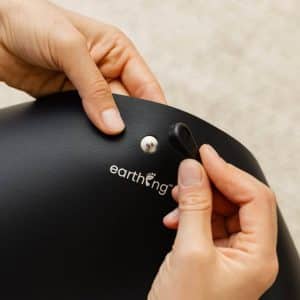
In these situations, some people choose to use indoor grounding systems, such as:
These connect to the Earth via a grounded outlet and may provide a similar conductive effect indoors.
While grounding shows promising physiological mechanisms, particularly in relation to inflammation, oxidative stress and circulation, it is important to note:
It is ultimately, best viewed as a low-risk, supportive lifestyle practice that may complement overall wellbeing.
Most recommendations suggest 20–30 minutes per day of direct contact with natural ground surfaces. This allows time for sustained electron exchange and potential physiological effects.
There is no evidence suggesting that grounding for longer periods is harmful. Many people ground for extended periods, particularly when outdoors. However, comfort, weather conditions and safety should always be considered.
Some people report immediate relaxation, but measurable physiological effects such as changes in inflammation or cortisol are more likely to occur with consistent exposure over time.
The most effective surfaces include:
These are conductive and allow electrical exchange with the Earth.
Most modern shoes, especially those with rubber soles, block grounding. Barefoot contact is generally required unless using specialised conductive footwear.
Grounding has been studied in small-scale trials showing effects on blood viscosity, inflammation and stress hormones. However, large-scale clinical evidence is still limited, and more research is needed.