How Can Earthing Affect Stress?
FREE Shipping On All Orders Over £70
Stress has become one of the defining health challenges of modern life. Whether it’s work pressures, financial worries, global uncertainty, or the relentless pace of daily demands, more adults and children than ever are living in a state of chronic stress. The toll that stress takes on the body is significant.
What many people don’t realise is that chronic stress isn’t just a mental experience. It creates measurable physiological changes: elevated cortisol, a dysregulated nervous system, disrupted sleep, increased inflammation, and suppressed immune function. Addressing it requires more than simply “relaxing.” The body needs to be brought back into balance at a biological level.
Earthing is one of the most natural and effective ways to do exactly that. Here’s how it works and what the science says:
When you experience stress, your body activates the sympathetic branch of the autonomic nervous system (ANS), commonly known as the fight-or-flight response. This triggers a cascade of physiological reactions: your heart rate rises, your breathing quickens, cortisol and adrenaline are released, and non-essential processes like digestion, immune function, and cellular repair are temporarily suppressed.
In short bursts, this response is essential for survival. The problem arises when the stress response becomes chronic, keeping the nervous system in a prolonged state of sympathetic overdrive. Over time, this contributes to anxiety, depression, poor sleep, increased inflammation, hormonal imbalance, and a range of serious long-term health conditions.
The antidote is parasympathetic activation, shifting the nervous system into its rest-and-digest state. And this is precisely where earthing has a direct, measurable effect.
When you make direct contact with the earth’s surface, free electrons flow from the ground into your body. These electrons are natural antioxidants that neutralise free radicals and reduce oxidative stress at a cellular level. But beyond this, earthing has a profound and well-documented effect on the nervous system itself.
It shifts the autonomic nervous system from sympathetic to parasympathetic. Research has confirmed that earthing produces a measurable shift in ANS activity, moving the body out of the fight-or-flight state and into rest-and-digest. This calming effect is felt throughout the body, from reduced muscle tension to slower, steadier breathing and a more settled heart rate. For more on how this process works, read our post on how earthing works.
It normalises cortisol. Cortisol, the body’s primary stress hormone, is supposed to follow a natural 24-hour circadian rhythm. Peaking in the morning to support wakefulness and declining through the day. Chronic stress disrupts this rhythm, keeping cortisol elevated at night and contributing to anxiety, insomnia, and immune suppression. Earthing has been shown to restore this natural cortisol pattern, bringing the body’s stress response back into healthy alignment.
It calms the nervous system. Studies using electromyography (EMG) and electroencephalography (EEG) measurements have recorded immediate and measurable reductions in muscle tension and neurological activity upon grounding. These changes reflect a genuine calming of the nervous system, not simply a placebo effect.
It reduces inflammation driven by stress. Prolonged cortisol elevation causes glucocorticoid receptor resistance, which impairs the body’s ability to regulate its own inflammatory response. By normalising cortisol and supplying free electrons directly, earthing addresses stress-driven inflammation from two angles simultaneously. Read more in our article on whether grounding reduces inflammation.
The evidence for earthing’s effects on stress and the nervous system is well established in peer-reviewed literature.
The foundational study in this area was conducted by Ghaly and Teplitz (2004), published in the Journal of Alternative and Complementary Medicine. Twelve subjects with chronic pain and sleep problems slept grounded for eight weeks. Their diurnal cortisol profiles normalised over the course of the study, with cortisol secretion resynchronising to the natural 24-hour circadian rhythm. Nearly all subjects reported improvements in sleep quality, pain levels, and stress. Including reduced anxiety, depression, and irritability.
A follow-up study by Chevalier and Mori (2006) used EMG and EEG measurements to record the physiological effects of grounding in real time. The results showed immediate and measurable reductions in overall stress levels and muscle tension upon earthing, alongside a clear shift in autonomic balance from sympathetic to parasympathetic activation — confirming the nervous system calming effects reported subjectively by Ghaly and Teplitz.
A 2022 study published in Biomedicines investigated the effects of earthing mats on stress-induced anxiety in animal models. The grounded group showed significant reductions in anxiety-like behaviour and measurable changes in neurohormonal stress markers compared to ungrounded controls, providing further mechanistic evidence for earthing’s anti-stress effects.
Most recently, a 2024 review by Dr. Laura Koniver published in the Medical Research Archives examined grounding as a treatment for anxiety, identifying multiple biological pathways through which earthing reduces the physiological drivers of anxiety which included cortisol regulation, autonomic balance, heart rate variability, and inflammation. The review concluded that grounding represents a promising adjunctive approach for anxiety and other stress-related mental health conditions.
Stress and sleep disruption are closely intertwined. Elevated cortisol at night is one of the most common reasons people struggle to fall asleep or stay asleep, and poor sleep in turn elevates stress. Creating a cycle that’s hard to break.
Earthing addresses both sides of this cycle. By normalising cortisol and shifting the nervous system into parasympathetic mode, it creates the biological conditions the body needs to enter deep, restorative sleep. Many people find that grounding while they sleep delivers some of the most noticeable results, precisely because sustained overnight contact allows the body’s stress and cortisol rhythms to fully recalibrate.
To explore this further, read our dedicated post on grounding while you sleep.
One aspect of stress that is often overlooked is its direct contribution to chronic inflammation. When cortisol remains elevated over time, the body’s ability to regulate its own inflammatory response deteriorates. This creates a feedback loop in which stress drives inflammation, and inflammation in turn amplifies the stress response.
Earthing interrupts this cycle by addressing both cortisol dysregulation and inflammation at their source. The free electrons absorbed from the earth neutralise the free radicals that drive oxidative stress and inflammation, while the normalisation of cortisol restores the body’s natural anti-inflammatory control mechanisms.
This is one of the reasons that people who begin a consistent grounding practice often report improvements across multiple areas simultaneously. From better sleep, less anxiety, reduced pain & more energy. This is because these systems are all interconnected, and earthing supports them at a foundational level.
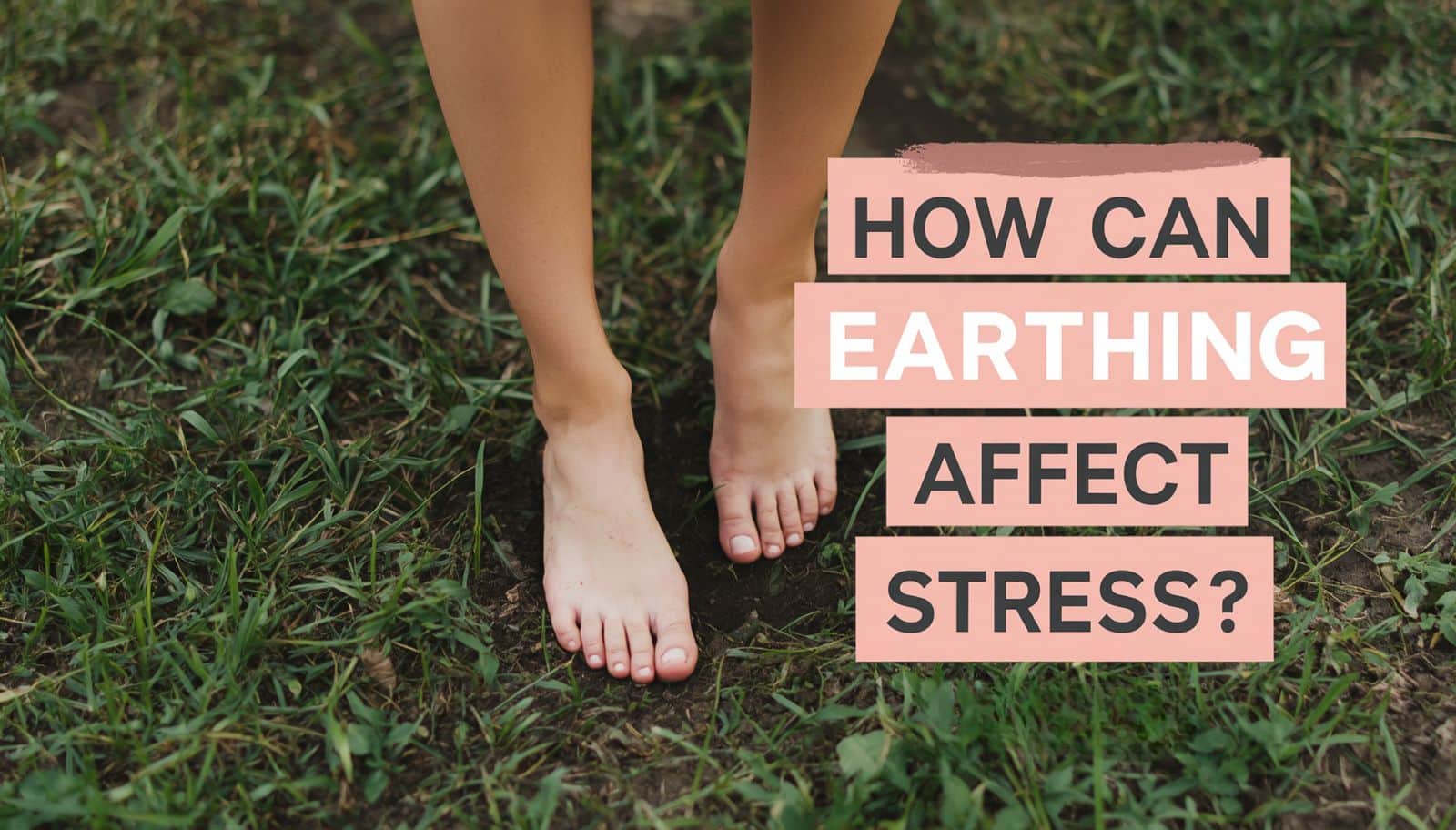
The simplest and most accessible form of earthing for stress is spending time barefoot outdoors on natural ground. Grass, soil, sand, and natural stone are all conductive surfaces, and even 20 to 30 minutes of barefoot contact can begin to shift the nervous system toward a calmer state. For a full guide on which outdoor surfaces are most effective, see our post on the most effective grounding surfaces explained.
Being in nature amplifies these effects further. The combination of natural light, fresh air, reduced sensory stimulation, and direct earth contact creates a powerful environment for nervous system recovery. The research consistently shows that people who spend regular time outdoors in direct contact with the earth experience lower stress levels, better sleep, and improved overall wellbeing.
When outdoor grounding isn’t possible, indoor earthing products offer an effective alternative. A grounding mat used at a desk or under your feet while relaxing, or a mattress cover used during sleep, can maintain the same biological connection to the earth’s charge throughout the day. For those who want a wearable option, the Earthband PEMF Bracelet supports the nervous system continuously throughout the day through its pulsed electromagnetic field, which mirrors the earth’s own natural frequency.
To summarise, consistent earthing practice has been associated with the following stress-related benefits, each supported by peer-reviewed research:
Earthing works on stress through several biological mechanisms: it shifts the autonomic nervous system from sympathetic to parasympathetic activity, normalises cortisol secretion, reduces inflammation driven by chronic stress, and supplies free electrons that neutralise the oxidative stress caused by prolonged cortisol elevation. The combined effect is a measurable calming of the nervous system and a restoration of the body’s natural stress regulation.
Some people notice a calming effect within a single session, particularly in terms of reduced muscle tension and a quieter mind. Research suggests that deeper changes, such as cortisol normalisation and improved sleep, tend to develop over several weeks of consistent practice.
Yes. A 2024 peer-reviewed review published in the Medical Research Archives identified grounding as a clinically promising approach for anxiety, working through multiple pathways including cortisol regulation, autonomic nervous system balance, and reduced neuroinflammation. It is best used as a complementary practice alongside other treatments rather than a standalone intervention for clinical anxiety.
A minimum of 20 to 30 minutes is generally recommended for a meaningful session, as this allows enough time for the nervous system shift to take effect. Longer sessions, particularly overnight grounding, produce more sustained results.
Yes. Stress-related sleep problems are often driven by elevated cortisol at night. Earthing has been shown to normalise the cortisol rhythm and promote parasympathetic nervous system activity, both of which create the conditions for deeper, more restorative sleep.
Yes. Grounding mats, mattress covers, and earthing patches all deliver the same electrical connection as outdoor barefoot grounding and produce the same physiological effects. They are particularly useful during colder months or for people with limited access to natural outdoor spaces.
Tag: Health