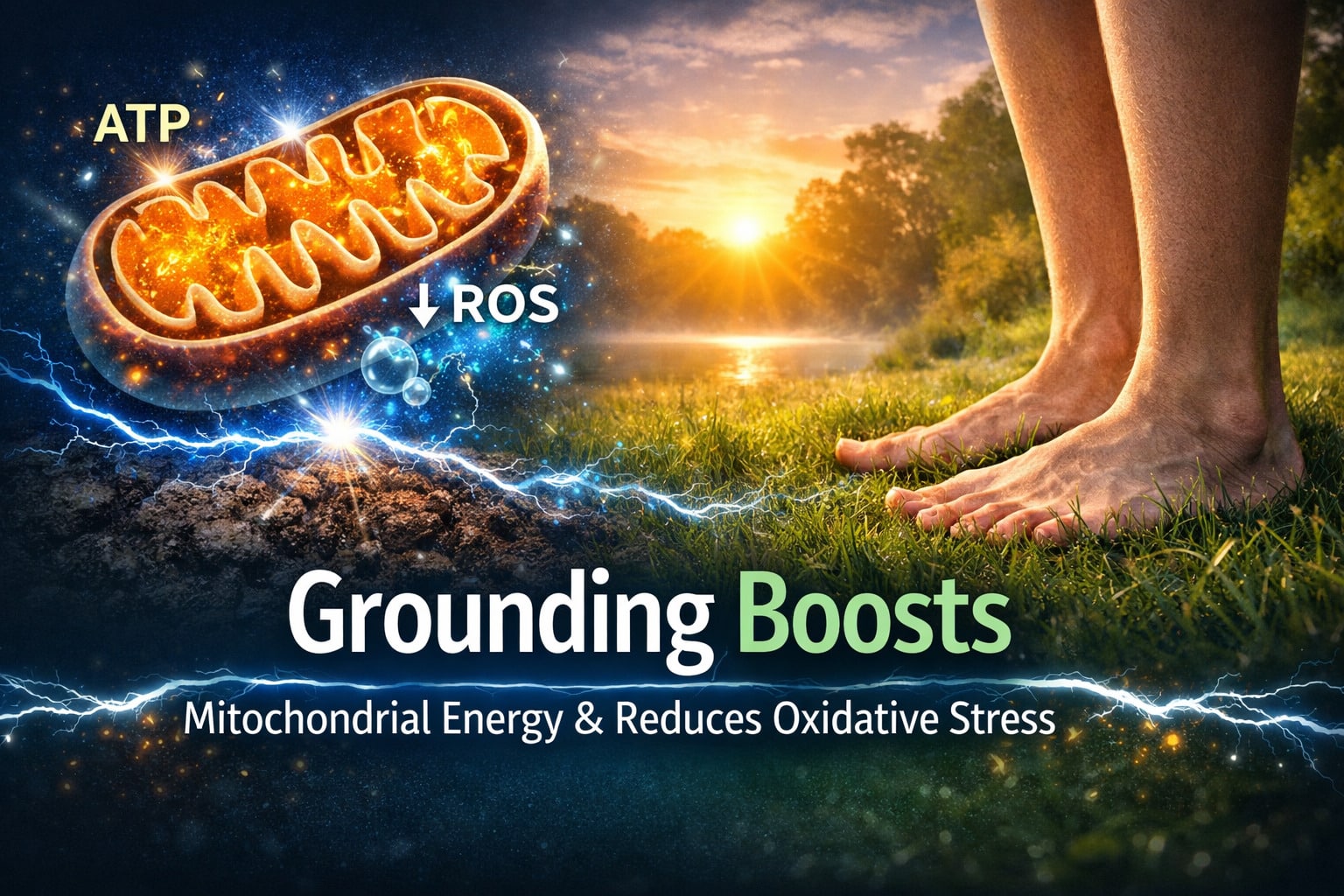
How Grounding Supports Mitochondrial Energy and Reduces Oxidative Stress
New Research Study!
A newly published research study has now provided direct experimental evidence showing that grounding (earthing) may improve how our mitochondria produce energy while simultaneously reducing oxidative stress.
This is an important development because it moves grounding from anecdotal experience into measurable biological mechanisms.
Researchers examined isolated mitochondria under three conditions: grounded, sham grounded, and non-grounded. They measured ATP production (cellular energy), reactive oxygen species (ROS), and mitochondrial membrane potential.
The results were striking.
Grounded mitochondria produced approximately 5–11% more ATP compared with control conditions.
ATP (adenosine triphosphate) is the body’s primary energy molecule, powering nearly every cellular process. From muscle contraction and immune defence to cellular repair and regeneration. Every movement, thought, and healing response relies on efficient ATP production.
Even a small percentage increase in ATP at the mitochondrial level can have meaningful effects across billions of cells throughout the body.
Grounded mitochondria produced 22–33% less reactive oxygen species (ROS).
ROS are natural byproducts of energy production. However, when levels rise too high, they contribute to oxidative stress which a key driver of:
A comprehensive scientific review published on PubMed Central explains how oxidative stress damages cellular structures and disrupts mitochondrial function.
In this study, grounded mitochondria produced 22–33% less ROS, suggesting a meaningful improvement in oxidative balance.
The study found grounding caused a modest 5–6% reduction in mitochondrial membrane potential.
This is where it gets fascinating.
A slightly lower membrane potential actually improved the efficiency of the electron transport chain. In simple terms:
This suggests grounding shifts mitochondria into a more efficient, lower-stress energetic state.
Excess oxidative stress is strongly linked with:
The World Health Organization has long recognised oxidative stress as a contributor to non-communicable diseases worldwide.
By:
Grounding may support the body’s natural resilience mechanisms at a foundational level.
This provides a plausible biological explanation for why many people report improvements in:
After consistent grounding practice.
What makes this study particularly important is that it demonstrates a measurable electrical mechanism.
Grounding appears to influence electron flow within mitochondria. Even small electrical changes at the membrane level can create disproportionate improvements in oxidative balance.
In other words:
The authors suggest grounding could potentially be explored as a therapeutic or preventative strategy for conditions linked to mitochondrial oxidative stress.
However, they also emphasise that:
This is responsible science and something we fully support.
At BeGrounded, we believe in evidence-led wellness and emerging research like this supports the role of grounding as a foundational lifestyle practice.
One important detail often overlooked in grounding discussions is consistency.
You do not need direct skin contact for effective grounding when using high-quality conductive materials. Our carbon-based mattress covers are designed to:
Unlike many silver-threaded sheets, carbon-based conductivity does not rely on fragile metallic fibres.
If mitochondrial efficiency improves even slightly through consistent grounding exposure, overnight contact may offer a practical way to support that process.
This study provides direct experimental evidence that grounding can:
The findings offer a scientifically plausible mechanism for reported grounding benefits and more cellular energy with less oxidative stress.
That is not mystical.
That is measurable bioenergetics.
As research continues to evolve, grounding is moving from fringe discussion into serious biological investigation. And that is something we find deeply encouraging.
Your energy begins at the cellular level.
The researchers examined isolated mitochondria (the energy-producing structures inside cells) and measured:
They found grounded mitochondria produced more ATP and significantly less oxidative stress compared to non-grounded conditions.
ATP production increased by approximately 5–11% under grounded conditions.
While that may sound modest, small improvements at the mitochondrial level can have meaningful effects across billions of cells in the body.
ROS are natural byproducts of energy production. In normal amounts, they play useful roles. But excess ROS contributes to oxidative stress, which is linked to:
This study showed grounding reduced ROS by 22–33%, suggesting a substantial improvement in oxidative balance.
Grounding caused a small (5–6%) reduction in mitochondrial membrane potential.
This subtle electrical shift appears to improve the efficiency of the electron transport chain, meaning:
In simple terms, mitochondria worked more efficiently under grounded conditions.
Mitochondria power nearly every function in your body from muscle contraction to immune defence.
When mitochondria are efficient:
This study suggests grounding may shift mitochondria into a lower-stress, more energy-efficient state which could help explain reported benefits such as improved recovery, better sleep, and enhanced resilience.
Please note our office will be closed from 29.03.26 until 03.04.2026. All orders received between these dates will be despatched on 04.04.2026
Thank you for your support!