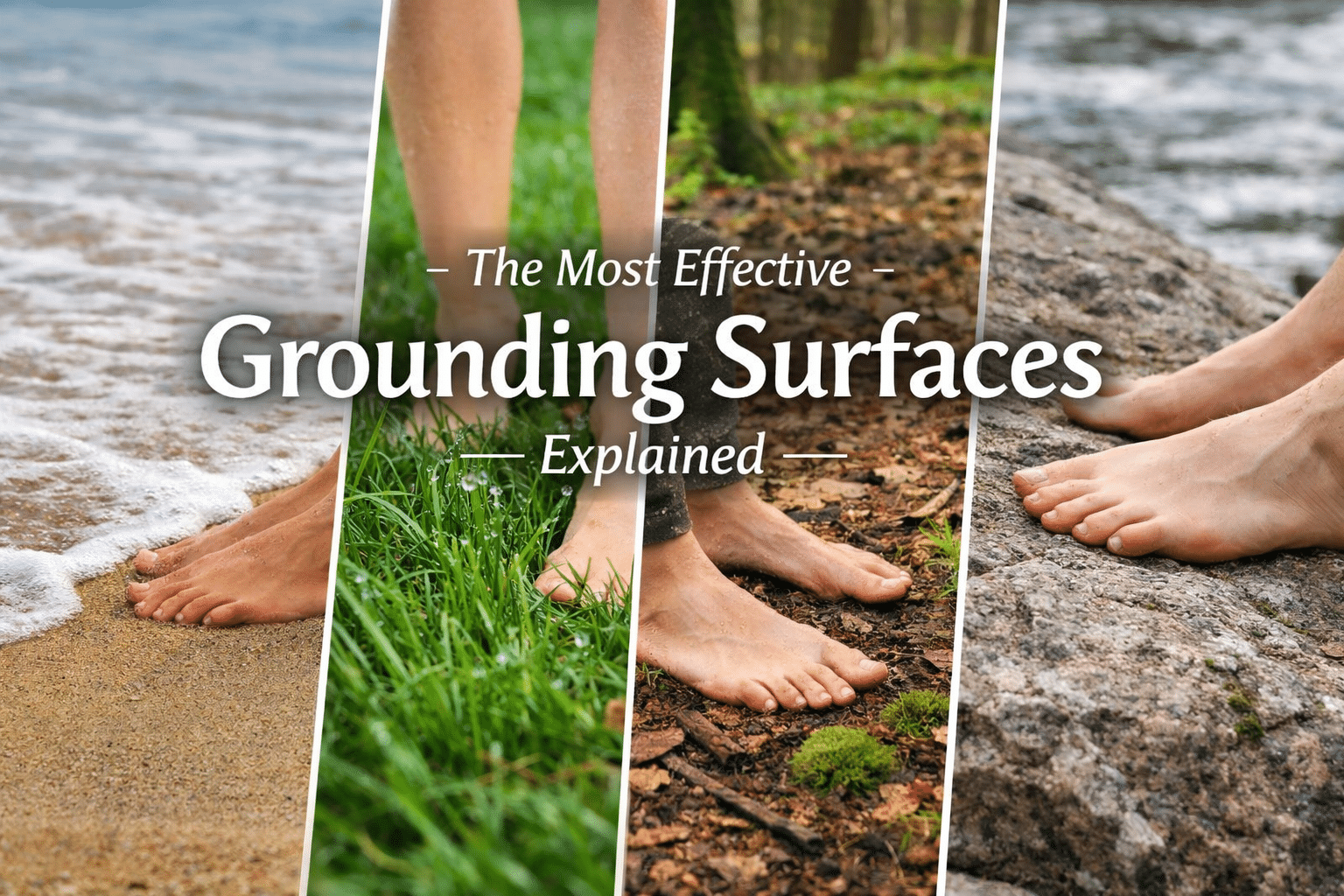
The Most Effective Grounding Surfaces Explained
The Most Effective Grounding Surfaces Explained
Grounding, also known as earthing, is the practice of reconnecting the body to the earth’s natural electrical charge. While the idea itself is simple, one key detail is often overlooked: not all surfaces ground you equally.
Some surfaces allow electrons to flow freely into the body, while others block grounding altogether. Understanding which surfaces are most effective helps you ground safely, confidently and with better results.
Below, we explain the most effective grounding surfaces, how they work, and what to avoid.
Wet sand is widely regarded as the most effective natural grounding surface.
Why it works:
When sand is wet, it becomes highly conductive. Moisture, particularly when combined with salt from sea water, allows electrons from the earth to move easily into the body.
How to ground on wet sand:
Wet sand offers excellent conductivity with minimal effort.
Salt water is one of the best natural conductors on earth.
Why it works:
The mineral content of sea water allows electrons to move rapidly, creating strong grounding effects even during shorter sessions.
Things to note – Cold water grounding can feel intense at first. It’s best to start with short exposure and gradually build up.
Grass and soil that are directly connected to the earth provide reliable grounding.
Why it works:
Important note – Artificial grass does not ground you, even if it looks natural.
Forest floors offer a combination of grounding and natural calm.
Why it works:
Sitting or standing barefoot on the forest floor allows for gentle but effective grounding.
Some natural stones can ground you, but effectiveness varies.
What to know:
Stone grounding can be effective in certain conditions but is less reliable than soil or wet sand.
For clarity, the following surfaces block grounding:
Even outdoor-looking surfaces may prevent grounding if they are insulated.
Regular, shorter grounding sessions often provide better results than occasional long ones.
Outdoor grounding isn’t always convenient due to weather, location or time constraints.
Indoor grounding options allow you to stay connected to the earth while resting or sleeping, providing a consistent and practical alternative when outdoor grounding isn’t possible.
Tag: Learning
Please note our office will be closed from 29.03.26 until 03.04.2026. All orders received between these dates will be despatched on 04.04.2026
Thank you for your support!