What Is Grounding or Earthing?
FREE Shipping On All Orders Over £70
Have you ever wondered if there’s a simple, natural way to improve your health, sleep, and energy without pills, subscriptions, or fancy tech? The answer might be right beneath your feet. Quite literally.
It’s called grounding (or earthing), and the best thing about it is that it’s completely free, backed by a growing body of scientific research, and accessible to everyone.
Grounding is the practice of connecting your body directly to the earth’s surface, either by walking barefoot outdoors or by using specially designed indoor earthing products for those unable to get outside. It is one of the most ancient and natural things a human body can do, and one of the most overlooked.
Your body is electrical by nature. Your brain, heartbeat, muscles, and cells all rely on electrical signals to function. When you make direct physical contact with the ground, the earth’s natural energy in the form of free electrons, flows into your body, where it helps neutralise harmful free radicals that contribute to inflammation, stress, and pain.
The earth’s surface holds a constant and virtually limitless supply of these free electrons, generated naturally through solar radiation and lightning strikes. Free radicals, which are produced during stress, illness, or injury, are positively charged and actively seek out electrons to stabilise themselves.
In the process, they can damage healthy cells and drive chronic inflammation, accelerated ageing, and disease.
Grounding provides a direct supply of electrons to counteract this process, stabilising the body’s natural rhythms, supporting recovery, and restoring biological balance, all without side effects. To understand the full mechanism in more detail, read our guide on how earthing works.
Grounding is not simply a wellness trend. It is supported by peer-reviewed research published in respected scientific journals, and the evidence base has grown significantly in recent years.
The foundational work of Clint Ober, who pioneered the modern earthing movement, established that reconnecting the human body to the earth produces measurable physiological changes. Since then, dozens of studies have built on this foundation.
A landmark 2015 study by Oschman, Chevalier, and Brown, published in the Journal of Inflammation Research, found that grounding reduces or eliminates the cardinal signs of inflammation, including redness, heat, swelling, and pain, and proposed that earthing may be one of the most effective natural anti-inflammatory interventions available.
A 2023 review by Sinatra, Sinatra, and Chevalier, published in the Biomedical Journal, reinforced these findings, identifying grounding as a universal anti-inflammatory remedy with significant positive impacts on cardiovascular health, immune function, and chronic disease prevention.
Also in 2023, a study published in the Biomedical Journal by Jamieson examined grounding in relation to electromagnetic hygiene, concluding that regular earthing may help protect the body against the biological effects of environmental electromagnetic fields — a growing concern in modern life.
A 2022 pilot study published in Healthcare found that grounding improved sleep quality in patients with mild Alzheimer’s disease, adding to a body of evidence that the benefits of earthing extend well beyond general wellbeing into clinical health outcomes.
Most recently, a 2025 randomised, double-blind, placebo-controlled study published in Advances in Integrative Medicine found that participants who slept grounded for six hours showed significant improvements in sleep quality and duration compared to ungrounded controls — one of the most rigorous study designs yet applied to earthing research.
For a deeper look at the research behind grounding, visit our earthing research page or read our round-up of the 3 latest earthing studies you need to know about.
The evidence consistently points to a wide range of benefits from regular grounding practice. These include:
For a comprehensive breakdown of the science behind each of these, read our full article on the benefits of earthing and grounding. If you are specifically interested in how grounding affects the body’s inflammatory response, our dedicated post on whether grounding reduces inflammation covers the research in detail.
One of the most common questions we get asked is how long grounding actually takes to work. While electron transfer begins the moment you make contact with the earth, research suggests it takes around 20 to 30 minutes for electrons to travel from the feet to the upper body. That’s why a minimum of 30 to 40 minutes per day is generally recommended, with longer sessions delivering greater benefit.
The good news is there is no upper limit. There is no such thing as too much grounding. The soles of the feet have over 7,000 nerve endings, each connected to different parts of the body, making barefoot grounding particularly restorative for organs, the spine, and the nervous system as a whole.
Not all surfaces are equally conductive, and knowing which ones work makes a real difference to your practice. If you are barefoot or have direct skin contact, you will be grounded on the following natural surfaces:
Grass, soil, gravel, natural stone, sand, brick, and unpainted or unsealed concrete are all effective. Damp surfaces are more conductive than dry ones, so dewy morning grass or wet sand after the tide are particularly powerful.
The following surfaces will not ground you, regardless of how long you stand on them: tarmac, vinyl, wood such as decking, painted or sealed concrete, tiled floors, and carpet.
For a full breakdown of which outdoor surfaces work best and why then take a look at our dedicated guide: The Most Effective Grounding Surfaces Explained.
Water is one of nature’s most effective conductors, which is why contact with natural water sources is one of the most powerful forms of earthing available. Options include walking barefoot on wet sand, standing or swimming in the sea, sitting beside a stream with your feet in the water, or simply gardening with your hands in damp soil.
Even walking on dew-covered grass first thing in the morning is enough to deliver a meaningful dose of what we call Vitamin G (grounding).
Modern life doesn’t always make outdoor barefoot grounding easy, particularly in the UK where the weather isn’t always on your side. Fortunately, you can still benefit from grounding indoors using scientifically tested earthing products that connect to the earth port of a standard plug socket and replicate the same electrical connection as standing barefoot outside.
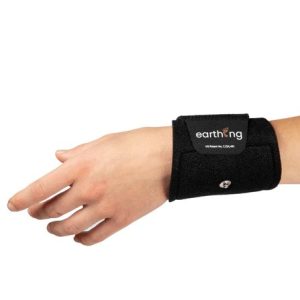
Indoor grounding options include grounding mats, mattress covers, sleep mats, pillow covers, earthing bands, and earthing patches. These allow you to ground while sleeping, working at your desk, watching TV, meditating, or reading. For help choosing the right product, see our guide to the most popular earthing products or our round-up of the best grounding mats in the UK.
If you’re new to indoor grounding and want to understand how it all fits together, our post on earthing at home is a great starting point, and our guide on how to set up a grounding sheet in a UK home walks you through the practical setup step by step.
Grounding works best when it becomes a consistent habit rather than an occasional activity. Here are some simple ways to build it into your day:
Morning: Stand outside barefoot with your tea or coffee for 10 minutes on grass or natural ground.
Workday: Place a grounding mat under your feet at your desk while you work.
Evening: Sit on the sofa with a grounding mat or earthing band.
Bedtime: Sleep with a grounding mattress cover or sleep mat for sustained overnight grounding.
They are the same thing. The two terms are used interchangeably. Earthing tends to be used in more scientific or clinical contexts, while grounding is the more widely used term in general wellness. Both refer to the practice of physically connecting the body to the earth’s surface to absorb free electrons.
Yes. There is a substantial and growing body of peer-reviewed research supporting grounding’s health benefits, published in journals including the Journal of Inflammation Research, the Biomedical Journal, and Advances in Integrative Medicine.
Yes. Indoor grounding products such as grounding mats, mattress covers, and earthing patches connect to the earth port of a standard UK plug socket and deliver the same electrical connection as being barefoot on natural ground.
Natural surfaces including grass, soil, sand, gravel, natural stone, and unsealed concrete all conduct the earth’s electrons effectively. Tarmac, vinyl, wood, carpet, and synthetic flooring do not.
Some people notice a difference within the first session, while for others it takes days or weeks of consistent practice. Research suggests electrons take around 20 to 30 minutes to travel from the feet through the body, which is why sessions of at least 30 minutes are recommended.
Yes. Reducing chronic inflammation is one of the most well-researched benefits of grounding, backed by multiple peer-reviewed studies. The free electrons absorbed from the earth neutralise positively charged free radicals that drive the inflammatory process.
Research strongly supports a positive link between grounding and sleep quality. Studies show that grounding normalises cortisol rhythms and reduces the stress response, both of which are closely tied to sleep. A 2025 clinical study found significant improvements in sleep quality and duration in grounded participants.
Grounding is natural and generally considered safe for most people. Those taking blood-thinning medication should consult their GP first, as grounding has mild blood-thinning properties. People with diabetes or circulatory conditions should also check with a healthcare professional before starting.
Experiences vary. Some people feel a gentle tingling, warmth, or a sense of calm during their first session. Others notice subtler changes over time, such as improved sleep or reduced pain.
The modern earthing movement was pioneered by Clint Ober, a former cable TV executive who made the connection between the body’s electrical nature and the earth’s electron field in the late 1990s.