Can Pets Benefit From Grounding
If you’ve ever watched your dog press their belly flat against cool earth on a hot day, or noticed your cat gravitating toward the one patch of bare floor rather than their expensive bed, you’ve witnessed something worth paying attention to. Animals are instinctive grounders. The question isn’t really can pets benefit from grounding, it’s whether we’re giving them enough opportunity to do it.
This guide covers everything you need to know: the science, the signs, the benefits by animal type, how to ground your pet indoors, and what to watch for when you start.
Grounding, or earthing, is the practice of making direct physical contact with the Earth’s surface including grass, soil, sand, natural stone, or water. This allows the body to absorb the Earth’s free electrons. The Earth carries a natural negative electrical charge, and when a living body connects to it, those electrons flow in and neutralise positively-charged free radicals and the unstable molecules responsible for inflammation, oxidative stress, and cellular damage.
For humans, the research is growing and compelling. Studies published in peer-reviewed journals have shown that grounding can reduce inflammation, improve sleep, lower cortisol, support heart health, and ease chronic pain. You can read a fuller breakdown of the science on our earthing research page.
For pets, the same biological principles apply, because the same biology is at work.
Wild animals are naturally and continuously grounded. Wolves, big cats, foxes, and birds of prey spend their lives in direct contact with the Earth’s surface. They sleep on it, run on it, dig into it. They don’t develop the chronic degenerative diseases such as arthritis, obesity, anxiety disorders, autoimmune conditions. Which have become increasingly common in domesticated pets.
That’s not a coincidence.
Today’s typical pet lives very differently from its wild counterpart:
When you add in the fact that modern homes are saturated with EMFs from Wi-Fi routers, smart devices, and appliances, it’s clear that pets face the same fundamental disconnection from the Earth that affects their owners, with no way to consciously address it themselves.
While dedicated animal earthing studies are still limited, the mechanistic evidence is strong. The biological pathways through which grounding benefits humans such as free radical neutralisation, cortisol regulation, improved vagal tone, better blood viscosity. All of which are not uniquely human. They are mammalian.
A landmark paper published in the Journal of Environmental and Public Health (Chevalier et al., 2012) established that grounding “reduces or prevents the cardinal signs of inflammation following injury.” That inflammatory process mediated by free radicals, is identical in dogs, cats, and humans.
A veterinarian with 40 years of holistic practice, writing for the Earthing Institute, noted that animals instinctively seek grounding when ill or stressed. This includes digging into carpet, burrowing under bushes in the garden, pressing their body low to cold stone. He observed consistent improvements in both physical health and behaviour in animals whose owners increased their access to natural ground surfaces.
The Earthing Institute also collects ongoing pet testimonials from owners worldwide from dogs healing faster from surgery, cats reducing compulsive grooming, anxious pets calming without medication.
1. Reduced Inflammation and Joint Pain
Inflammation is at the root of most chronic pet conditions like arthritis, hip dysplasia, skin conditions, allergies, and post-surgical recovery. Free electrons from the Earth act as natural antioxidants, neutralising the free radicals that drive inflammatory responses.
Senior dogs in particular can benefit enormously. Many owners report that older dogs with stiff joints become noticeably more mobile and more willing to get up and move after consistent grounding. Whether through more time outside on grass or the introduction of an indoor grounding mat.
2. Calmer Behaviour and Reduced Anxiety
Anxiety is one of the most common issues in domestic pets. Separation anxiety, noise phobia (fireworks and thunderstorms are particular problems in the UK), reactivity on the lead, and general nervousness can all have roots in a dysregulated nervous system.
Grounding helps to shifts the autonomic nervous system from sympathetic dominance (the “fight or flight” state) toward parasympathetic activity, the “rest and digest” state. This is the same mechanism that makes grounding effective for human stress and anxiety. The vagus nerve plays a central role in this shift, and it’s just as present in dogs and cats as it is in us.
Pets that spend regular time grounded tend to pace less, vocalise less, and sleep more deeply. This is particularly notable in rescue animals and those with histories of trauma.
3. Better Sleep Quality
Animals that sleep on grounding surfaces whether outdoors, on a grounding mat, or on an earthing sheet alongside their owner have been known to consistently demonstrate more settled sleep. Grounding helps regulate circadian rhythms and cortisol patterns, meaning pets fall asleep faster and stay asleep longer.
If your pet is restless at night, repeatedly changing position, or sleeping far less than is typical for their breed or age, disrupted electrical balance could be a contributing factor.
4. Faster Recovery from Injury or Surgery
The Earthing Institute documented a case of a Golden Retriever named Lance who slept on a grounding mat during post-surgical recovery. His veterinarian noted he healed unusually quickly. This aligns with human grounding research showing improved wound healing and faster tissue regeneration in grounded subjects.
The mechanism is well understood – grounding improves blood flow, reduces inflammation at the wound site, and supports the delivery of oxygen and nutrients to healing tissue.
5. Healthier Skin and Coat
Several pet owners report improvements in their animals’ skin and coat condition after regular grounding. From reduced shedding, less itching, improved fur quality. One cat owner reported that their elderly cat’s fur grew back on patches that had been bare for years after she started sleeping on a grounded surface.
Given that many skin conditions in pets are inflammatory or immune-driven, the anti-inflammatory effect of grounding provides a plausible explanation.
6. Improved Immune Function
The Earth’s surface is a natural antioxidant environment. Regular contact with it helps regulate the immune system. Helping reduce autoimmune over-reactivity while supporting the body’s genuine defences. For pets prone to allergies, recurrent infections, or autoimmune conditions, consistent grounding is worth exploring as a complementary approach alongside veterinary care.
Animals can’t ask for what they need, but they show you. Watch for these behaviours:
Pets tend to find grounding surfaces instinctively. The challenge is simply making those surfaces available.
Dogs
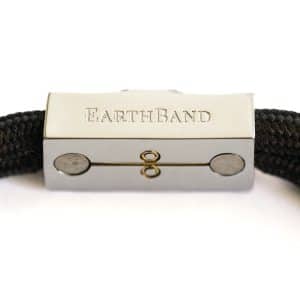
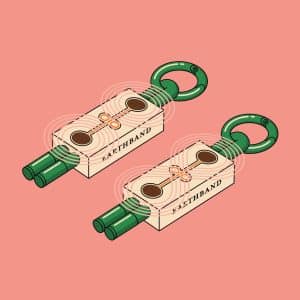
Another option worth considering is attaching a PEMF Earthband to your dog’s collar. PEMF (Pulsed Electromagnetic Field) therapy works by emitting low-frequency electromagnetic pulses that mimic the Earth’s natural Schumann resonance. Essentially delivering the benefits of grounding continuously, even when your dog is indoors or on a lead walking on pavement. It’s a particularly useful option for older dogs, those recovering from injury, or dogs that simply don’t get enough time on natural surfaces.
Cats
Cats are naturally more cautious about new objects but are often powerfully drawn to grounding surfaces once introduced. Indoor cats benefit enormously from any access to natural ground, even a supervised session in a garden or on a balcony with soil-filled planters.
For full indoor cats, a grounding mat placed near a favoured sleeping spot or simply left on the floor for them to discover is the most practical option.
Many cats sniff the mat, walk away, and return to it within hours.
Rabbits, Guinea Pigs & Small Animals
Small pets are often forgotten in the earthing conversation, but they can benefit just as much. Rabbits and guinea pigs that have outdoor hutch time or regular access to grass are naturally grounded. Those kept entirely in indoor cages rarely make contact with the Earth at all. A grounding mat at the base of an indoor enclosure, or regular outdoor time in a run on grass, makes a meaningful difference.
Not every pet can spend hours outside each day especially in British weather. Here’s how to bring grounding inside:
Yes. Grounding is one of the safest wellness practices available. No supplements, no medication, no risk of adverse interaction. The Earth’s electrical field is a natural, gentle, constant energy source that all living organisms evolved alongside.
A few practical points worth noting:
Many pet owners report that grounded dogs are noticeably calmer during fireworks and thunderstorms. Grounding supports the parasympathetic nervous system and reduces cortisol, which can take the edge off fear responses. Though it works best as part of a consistent daily routine rather than a last-minute fix.
Absolutely. An indoor grounding mat is specifically designed for situations like this. Most indoor cats, once comfortable with the mat, will choose to sleep on it over other surfaces. The electron transfer is equivalent to outdoor contact.
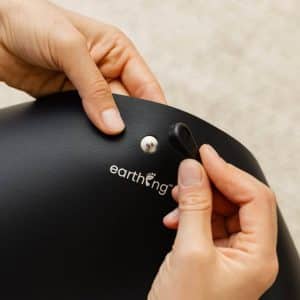
Yes, though contact is most effective at areas of thinner fur or bare skin (paws, belly, nose). Paw pads in particular are highly conductive. The mat doesn’t need direct contact with bare skin to work.
At least 20–30 minutes daily will provide benefit, but more is better. If the mat is placed where your pet already rests, extended contact happens naturally. Overnight grounding during sleep is particularly valuable.
Yes, as long as they’re both in contact with the mat, both are grounding. Mats are available in different sizes to suit different animals and households.
Yes. The PEMF Earthband can be attached directly to your dog’s collar, making it one of the easiest ways to deliver continuous grounding benefits without relying on outdoor time or a mat. It’s particularly useful for dogs that spend a lot of time indoors or on pavements.
PEMF stands for Pulsed Electromagnetic Field therapy. It works by emitting low-frequency electromagnetic pulses that mimic the Earth’s natural Schumann resonance frequency (7.83 Hz), replicating the same electrical signals your pet would receive from direct contact with the ground.