Are There Any Grounding Mat Dangers?
The Safety and Benefits of Grounding Explained
One of the most common questions people ask when they first discover grounding, also known as earthing, is whether it is safe. It’s also normal to wonder if there are any grounding mat dangers when using products indoors.
These are sensible questions, especially when discussions involve body voltage and reconnecting with the earth’s natural energy. Below, we break things down clearly, covering grounding safety, how grounding mats work, potential side effects and the benefits of grounding indoors.
Grounding is a natural process where the body connects directly with the earth’s electrical charge. Humans evolved in constant contact with the ground through barefoot walking and outdoor living. Only in relatively recent history have we become largely disconnected from the earth, particularly since the widespread use of rubber soled shoes and insulated indoor environments.
When the body makes direct contact with the earth, it can equalise electrically with the ground. This allows electrons from the earth to transfer into the body, helping restore electrical balance. Many people describe grounding as calming and restorative, especially after spending time barefoot outdoors.
Most people can recall moments such as walking on the beach or standing barefoot on grass and feeling relaxed, centred or refreshed. Grounding products are designed to recreate that natural connection when outdoor grounding is not practical.
You can also explore independent grounding research from the Earthing Institute for a deeper look at how grounding has been researched to date.
While grounding outdoors is ideal, it isn’t always possible. Some people have mobility challenges, live in city environments without access to green space, or experience climates where barefoot grounding could be uncomfortable or unsafe.
Modern life also means we spend much of our time indoors, in buildings that are insulated from the earth. This is where grounding mats and grounding sheets come in.
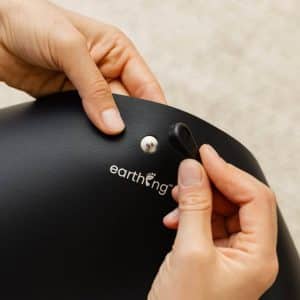
Grounding mats are designed to allow earthing indoors by connecting to the ground port of a home’s electrical socket or to a grounding rod placed outside. This connection links the mat directly to the earth, allowing electrons to flow naturally through the grounding system.
Importantly, grounding mats do not plug into electrical power. They connect only to the grounding port, which is linked to the earth via your home’s wiring.
If you are deciding between different grounding products, our guide comparing grounding bands vs mats can help you choose the option that best suits your routine.
Yes. Grounding mats are safe when they are manufactured correctly and used as intended.
High quality grounding products, including the Earthing® range supplied by BeGrounded, include built in safety features. These products use a current limiting resistor within the grounding cord, which provides an additional layer of protection in the unlikely event of an electrical fault nearby, such as contact with a faulty appliance. It’s important to buy from a reputable company and not cheaper ‘copy products’ that don’t come with the required safety features.
This safety design ensures that grounding products conduct only the earth’s natural electrical potential and not household electricity.
Not all grounding mats are made in the same way, and the materials used can make a difference to both performance and longevity.
Carbon infused grounding mats, including the BeGrounded mats, use a conductive carbon layer within the mat’s surface. Carbon is naturally conductive, stable and widely used in medical and electrical applications. In grounding products, this allows electrons from the earth to distribute evenly across the mat’s surface, helping create a consistent grounding connection.
Compared to older designs that rely solely on fine metallic or silver threads, carbon infused grounding mats are generally more durable and less affected by moisture, body oils or regular cleaning. This helps maintain conductivity over time and reduces the risk of performance loss as the product ages.
Carbon infused grounding mats are also flexible in how they are used. They can be placed under the feet while working at a desk, on a chair, on the sofa, or used during rest and relaxation. Some people also choose to use carbon infused grounding mats and mattress covers for grounding while you sleep, allowing for extended grounding overnight.
To ensure safe grounding indoors, a few simple steps are recommended:
Check your socket – Before using a grounding mat, test your socket with a socket tester to confirm it is properly grounded. Only use the mat if the tester confirms a correct earth connection. If you are unsure, consult a qualified electrician or use a grounding rod.
Speak to a healthcare professional if needed – If you have underlying health conditions, take blood thinning medication or use a pacemaker, it is advisable to speak with your GP before starting grounding. Grounding is often associated with improved circulation, so individual advice is always best.
Start slowly – Some people notice unusual sensations when they first begin grounding. This is often described as the body adjusting to the earth’s natural electrical state. Starting with shorter grounding sessions and gradually increasing use can help the body adapt comfortably.
Unplug during thunderstorms – As a general safety precaution, it is recommended to unplug grounding mats during thunderstorms, just as you would with other electrical devices.
When used consistently, grounding mats may support overall wellbeing in several ways. Commonly reported benefits include:
Improved sleep quality – Grounding is often associated with improved sleep and better regulation of natural sleep patterns.
Reduced inflammation and discomfort – Some studies suggest grounding may help support the body’s inflammatory response, which can contribute to comfort and recovery.
Stress reduction – Grounding may help calm the nervous system, supporting relaxation and emotional balance.
Enhanced sense of wellbeing – Many people report feeling more grounded, centred and connected when grounding becomes part of their routine.
Grounding should be viewed as a supportive wellness practice rather than a medical treatment, and individual experiences may vary.
A carbon infused grounding mat is a grounding surface that uses a conductive carbon layer to connect the body to the earth’s natural electrical charge when used indoors.
Carbon infused grounding mats connect to the earth through a grounded socket or grounding rod. The carbon layer allows electrons from the earth to distribute evenly across the mat’s surface.
Yes, grounding mats can be used in both home and office environments, provided there is access to a grounded socket.
Yes, absolutely! Carbon infused grounding mats are safe when used as directed with a properly grounded connection. They do not carry electrical power and only conduct the earth’s natural electrical potential.
Carbon infused mats use a stable, durable carbon layer rather than relying solely on fine metallic or silver threads. This helps maintain conductivity over time and reduces the risk of degradation from moisture or regular use.
Some people choose to use carbon infused grounding mats and mattress covers during sleep by placing them in the bed. This allows for extended grounding during rest, provided they are used safely and correctly.