Benefits of Earthing or Grounding
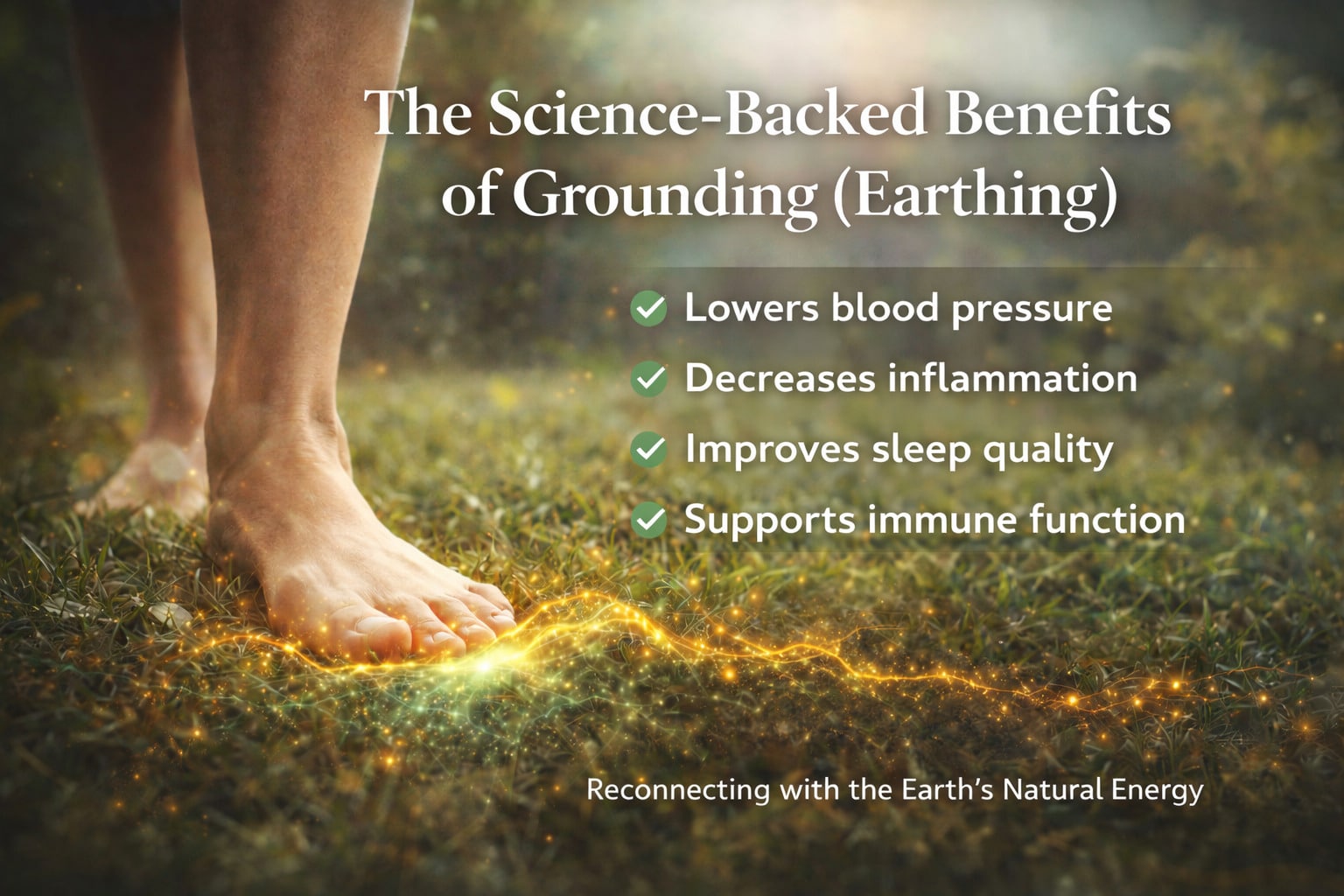
The Science-Backed Benefits of Grounding
Grounding is also known as earthing and is one of the simplest ways to reconnect the human body with its natural electrical environment.
At its core, grounding involves direct physical contact with the Earth’s surface. This can mean walking barefoot on grass, soil or sand. Now with the help of technological advances it can also be done using conductive systems designed to replicate that connection indoors.
While grounding is often described as an ancient practice, modern research is now exploring its measurable physiological effects. Particularly around inflammation, stress hormones, cardiovascular health and sleep regulation.
Below, we explore the key benefits, alongside the emerging science.
High blood pressure (hypertension) is closely linked to chronic stress and elevated cortisol levels.
When we experience prolonged stress, the body increases production of stress hormones such as:
These hormones cause:
Over time, sustained hypertension increases the risk of cardiovascular disease, kidney dysfunction and stroke.
Emerging research suggests grounding may support cardiovascular function by improving blood flow and reducing stress-related physiological activation.
One study published in the Journal of Alternative and Complementary Medicine found that grounding improved blood viscosity. Meaning the blood became less “thick” and flowed more freely. Improved blood flow may reduce strain on the heart and arteries.
While grounding is not a replacement for medical treatment, it may be a supportive lifestyle factor for heart health.
Modern life keeps many people in a state of sympathetic nervous system dominance which is often referred to as “fight or flight.”
Grounding may help shift the body toward parasympathetic balance (rest and repair mode).
The theory is electrical:
Research has shown grounding may help regulate cortisol rhythms, particularly when practicing grounding overnight.
One study found that grounding during sleep helped normalise diurnal cortisol patterns.
Balanced cortisol levels are strongly associated with:
Chronic pain is often associated with inflammation and oxidative stress.
Oxidative stress occurs when reactive oxygen species (ROS) exceed the body’s antioxidant capacity. A comprehensive scientific review on oxidative stress explains how this process damages cells and tissues.
Grounding may act as a natural antioxidant mechanism.
Research published in the Journal of Inflammation Research suggests that electrons from the Earth may reduce inflammatory markers and support recovery following muscle strain.
Participants using grounding systems showed:
By reducing oxidative stress, grounding may support tissue repair and pain reduction.
Poor sleep is linked to:
Grounding may support better sleep by regulating stress hormones and circadian rhythm patterns.
Some participants in grounding sleep studies reported:
Because sleep is when mitochondrial repair and immune modulation occur, grounding overnight may provide consistent exposure during the body’s primary recovery window.
Inflammation is a natural healing process but chronic inflammation is associated with many modern diseases, including:
Chronic inflammation is often driven by oxidative stress and environmental factors such as pollution, processed foods and sedentary behaviour.
Grounding may help reduce inflammation by replenishing electrons that neutralise excess free radicals.
Studies using thermographic imaging have shown reductions in inflammatory response following grounding exposure.
While more large-scale research is needed, the anti-inflammatory mechanism remains one of the most compelling areas of grounding science.
The immune response and inflammatory response are closely linked.
Grounding may influence immune modulation through its effects on:
Research suggests grounding may enhance immune response by improving autonomic balance and reducing systemic stress load.
Additionally, the soles of the feet contain thousands of nerve endings and sensory receptors. Direct contact with natural surfaces may influence neurological signalling pathways that impact immune and endocrine systems.
Heart rate variability (HRV) measures the variation in time between heartbeats and is considered an important marker of autonomic nervous system balance.
Higher HRV is associated with:
Grounding research has shown improvements in HRV, suggesting improved nervous system regulation and cardiovascular function.
Improved blood flow and reduced blood viscosity may also reduce the risk of clot formation and coronary strain.
Grounding simply means making direct contact with the Earth’s surface.
Traditionally, this includes:
Modern lifestyles often prevent regular direct contact due to insulated footwear, synthetic flooring and urban environments.
For those unable to ground outdoors consistently, conductive systems may provide an indoor alternative.
Reported benefits of grounding include:
While grounding should not replace medical care, it represents a low-risk lifestyle intervention that may support the body’s natural regulatory systems.
The growing body of research around oxidative stress, inflammation and bioelectrical balance suggests that reconnecting with the Earth’s surface may have more biological relevance than previously understood.
Whether through barefoot walking or structured grounding practices, reconnecting with the Earth remains one of the simplest wellness practices available.
Grounding, also known as earthing, refers to making direct physical contact with the Earth’s surface such as walking barefoot on grass, soil, or sand or using conductive systems that replicate that connection indoors.
The theory behind grounding is that the Earth carries a natural negative electrical charge. When the body makes contact with the ground, electrons may transfer into the body, potentially helping to neutralise free radicals and reduce oxidative stress.
Grounding may reduce inflammation by supplying free electrons that act as natural antioxidants. These electrons can help neutralise reactive oxygen species (ROS), which contribute to oxidative stress and chronic inflammation.
Some research suggests grounding may help regulate cortisol rhythms and support circadian balance. Cortisol is a stress hormone that should be lower at night and higher in the morning.
When cortisol levels are dysregulated, sleep disturbances may occur. Grounding during sleep has been associated with improved sleep quality and better hormonal balance in small studies.
Grounding may support nervous system regulation by shifting the body from sympathetic (“fight or flight”) dominance toward parasympathetic (“rest and repair”) balance.
Some studies have shown improvements in cortisol regulation and heart rate variability (HRV), both of which are linked to stress resilience and autonomic nervous system function.
Lower stress hormone levels may contribute to improved mood, better sleep, and enhanced recovery.
Yes, although research is still developing.
Studies have examined grounding’s effects on:
Grounding may support cardiovascular health by improving circulation and enhancing heart rate variability (HRV). Higher HRV is associated with better autonomic balance and stress resilience.
Improved blood flow and reduced blood thickness may also lower strain on the cardiovascular system.
While grounding should not replace medical treatment, it may serve as a complementary lifestyle practice.