Does Grounding Reduce Inflammation?
Sign Up For 10% October Discount | FREE Shipping On All Orders Over £70
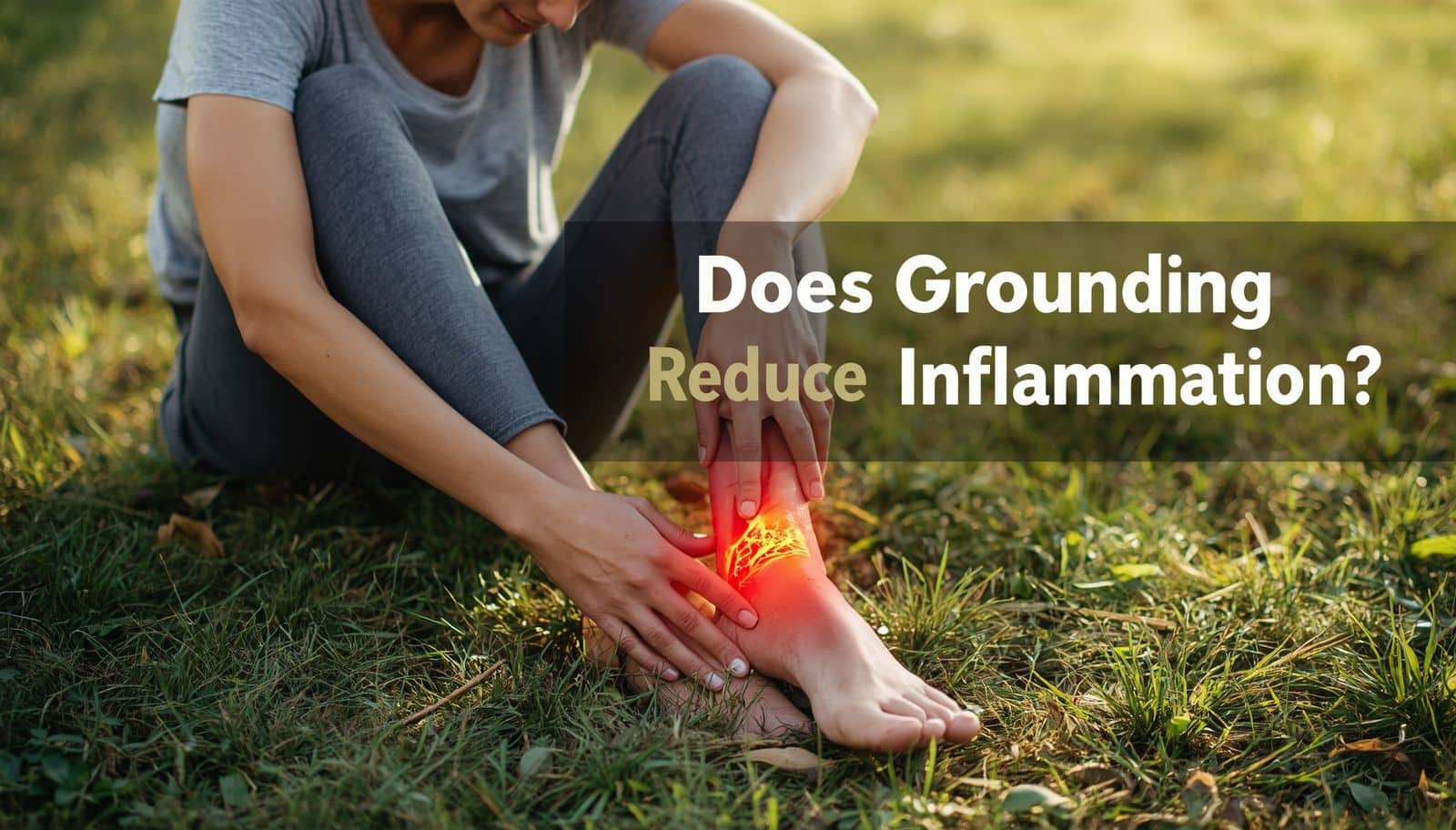
Does Grounding Reduce Inflammation?
Inflammation sits at the root of a surprisingly large number of health problems. Whether it’s the direct cause of a condition or simply making it worse, chronic inflammation is something most of us would benefit from keeping in check. The good news? There are natural, accessible practices that can help, and grounding is one of them.
In recent years, grounding (also known as earthing) has grown in popularity as a way to support overall health and wellbeing. But does it specifically help with inflammation? Let’s explore what the evidence says.
Grounding is the practice of physically connecting with the earth, usually through direct skin contact with the ground, in order to absorb its natural electrical charge. Whether you’re walking barefoot on grass or using a grounding mat indoors, the principle is the same: reconnecting your body to the earth’s surface energy.
Research into grounding has accelerated over the past two decades, with peer-reviewed studies published in journals such as the Journal of Inflammation Research and the Journal of Alternative and Complementary Medicine beginning to confirm what many practitioners have long reported. The effects on inflammation, in particular, have attracted serious scientific interest.
Before looking at how grounding helps, it’s worth understanding what inflammation actually is.
Inflammation is a natural immune response. When the body detects damage or infection, the immune system sends white blood cells to the affected area to begin the healing process. On the surface, this shows up as redness, heat, and swelling. Internally, it can cause pain, discomfort, and reduced function.
In short bursts, this is exactly what the body needs. The problem arises when inflammation becomes chronic, lingering long after it’s served its purpose. Chronic inflammation is now widely linked to a range of conditions, from joint pain to fatigue, and keeping it under control is key to long-term health.
The scientific case for grounding as an anti-inflammatory practice is more robust than many people realise.
A landmark study published in the Journal of Inflammation Research in 2015 by Oschman, Chevalier, and Brown examined the physiological effects of grounding on the immune response and inflammation. The researchers found that direct contact with the earth allowed free electrons from the ground to enter the body, where they acted as natural antioxidants, neutralising positively charged free radicals that drive oxidative stress and chronic inflammation. The authors concluded that grounding may be one of the most natural and effective anti-inflammatory interventions available.
A separate study by Chevalier, Sinatra, Oschman, and Delany, published in the Journal of Alternative and Complementary Medicine in 2013, measured the effects of grounding on blood viscosity and red blood cell behaviour. Using zeta potential measurement, the research found that grounding significantly increased the electrical charge on the surface of red blood cells, causing them to repel one another and reducing clumping. This blood-thinning effect leads directly to improved circulation and a measurable reduction in systemic inflammation.
A 2004 study by Ghaly and Teplitz, also published in the Journal of Alternative and Complementary Medicine, documented changes in cortisol rhythms in grounded subjects. Participants who slept grounded for eight weeks showed more normalised cortisol patterns aligned with the body’s natural circadian rhythm. Since cortisol dysregulation is closely tied to chronic inflammation, this represents another meaningful pathway through which grounding may help.
Thermal imaging studies have added a visual dimension to the evidence. Patients with chronic pain and inflammation who used grounding during sleep showed visible reductions in inflammation at affected sites, captured using medical infrared imaging, after just a few nights of grounded sleep.
Yes, there is solid evidence to suggest grounding can reduce inflammation. Here’s how it works:
It influences white blood cell activity – Studies have shown that grounding creates measurable changes in how white blood cells are distributed in the body, directly affecting inflammatory response. It has also been shown to reduce pain in affected areas and improve visible markers of inflammation such as redness, swelling, and heat.
It thins the blood naturally – One of the more fascinating mechanisms is grounding’s effect on zeta potential, the energy exchange between red blood cells. When zeta potential increases, red blood cells repel each other more effectively, reducing clumping and thinning the blood. Some studies have recorded increases in zeta potential of up to 280%, which translates to a meaningful reduction in inflammation throughout the body.
It regulates cortisol – As shown in the Ghaly and Teplitz 2004 study, grounding helps normalise the body’s cortisol rhythm, reducing one of the key hormonal drivers of chronic inflammation and supporting the body’s ability to manage its own inflammatory response over time.
Not all surfaces are equally effective when it comes to grounding. If you want to get the most from your practice, choosing the right surface makes a real difference.
For a full breakdown of which surfaces work best and why, take a look at our dedicated guide – The Most Effective Grounding Surfaces Explained.
Getting into grounding doesn’t need to be complicated. The simplest approach is to go outside and walk barefoot on grass, soil, or sand, and even a few minutes a day can make a difference.
If going outdoors isn’t always practical, indoor grounding products work just as well. A grounding mat at your desk or under your feet while watching TV, or a grounding mattress cover while you sleep, allows you to stay connected to the earth’s charge throughout the day.
For targeting specific areas of discomfort or inflammation, Earthing patches are a great starting point, easy to use, focused, and effective whether you’re at home or on the go.
The benefits people report go well beyond reduced inflammation: better sleep, less pain, improved energy, and a calmer nervous system. For something so simple, it’s well worth trying.
Some people notice a difference within a few days of regular grounding, while for others it may take a few weeks of consistent practice. Results vary depending on the individual and the level of inflammation present, but many users report improvements in pain and swelling relatively quickly.
Even 20 to 30 minutes of daily grounding can be beneficial. Longer sessions, such as sleeping on a grounding mattress cover, tend to produce more noticeable results over time, as your body has more sustained contact with the earth’s charge.
Natural surfaces like grass, soil, sand, and even unpainted concrete are all conductive and effective for grounding. Tarmac, wood, and vinyl flooring are not conductive, so bare feet on those surfaces won’t have the same effect.
Yes. Grounding mats, mattress covers, and patches are designed to replicate the connection you’d get outdoors by plugging into your home’s earthed socket. They work just as effectively, making grounding practical year round regardless of the weather.
Grounding is generally considered safe and natural. However, if you take blood thinning medication, it’s worth speaking to your GP first, since grounding can thin the blood and may interact with your medication. Those with diabetes or circulation issues should also check with a healthcare professional before starting.
Many people with arthritis and other inflammatory conditions report significant relief from regular grounding. While more clinical research is needed, existing studies and widespread anecdotal evidence suggest it can be a helpful complementary approach alongside other treatments.