How Long Should I Ground Myself For?
Welcome to BeGrounded! If you’ve been exploring grounding (also known as earthing), you’re probably wondering:
How long should I ground myself for to experience the benefits?
The short answer is:
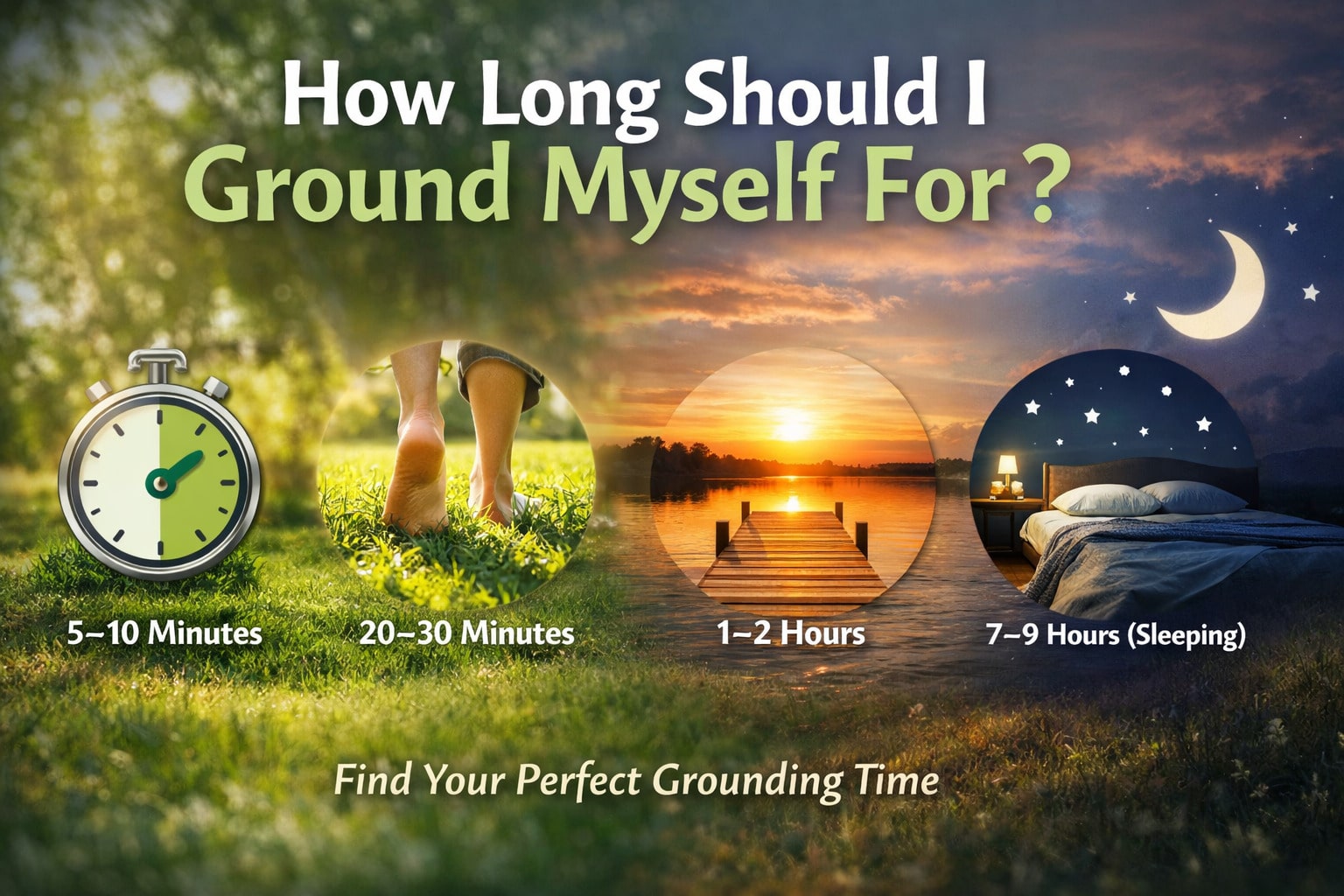
Around 20–30 minutes per day is a practical starting point, although even shorter sessions may still be beneficial when done consistently.
In this guide, we’ll break down how grounding duration may influence results, what the research suggests, and how you can easily incorporate grounding into your daily routine.
Grounding (earthing) is the practice of making direct physical contact with the Earth’s surface.
This can include:
The concept is based on simple electrical principles:
These electrons may help neutralise reactive oxygen species (ROS), molecules linked to oxidative stress and inflammation.
A scientific review explains how oxidative stress contributes to cellular damage and disease.
There is no fixed “perfect” duration, but research and practical experience suggest:
The key is consistency rather than duration.
Even a short grounding session can have noticeable effects.
Spending just 5–10 minutes barefoot outdoors may help:
This is likely linked to the body shifting toward a more parasympathetic (rest-and-repair) state.
If you’re feeling overwhelmed during the day, a quick grounding break can be a simple way to reset.
For most people, 20–30 minutes per day is a realistic and effective target.
Regular grounding at this duration has been associated with:
Many people find grounding works best when built into a routine, such as:
You can also explore this further in How Long To Walk Barefoot For Grounding?
If you have the time, longer grounding sessions may provide deeper effects.
Spending 1–2 hours grounded (for example at the beach, in nature, or gardening) may support:
One study found grounding may improve blood viscosity (blood flow properties).
While these findings are promising, more large-scale research is needed.
Grounding during sleep provides the longest continuous exposure.
Sleep is when the body is in its primary repair and recovery phase, including:
Grounding overnight may support these processes by maintaining a consistent electrical connection.
For many people, this also removes the pressure of finding time to ground during a busy day.
Consistency is key. Grounding doesn’t need to be complicated.
Here are some simple ways to integrate it:
Morning Routine
Lunch Break
Evening Wind-Down
Exercise
Grounding is a simple and natural practice, but it’s important to approach it realistically:
That said, grounding is a low-risk, accessible habit that may support:
Some people report feeling more relaxed within minutes. However, measurable effects such as improved sleep or reduced inflammation are more likely with consistent daily practice.
Yes, even 10 minutes may help reduce stress and promote relaxation. However, longer sessions (20–30 minutes or more) are generally recommended for sustained grounding benefits.
Some people report immediate relaxation, but measurable physiological effects such as changes in inflammation or cortisol are more likely to occur with consistent exposure over time.
There is no evidence that grounding for extended periods is harmful. Many people ground for several hours, particularly when outdoors or during sleep.
Both can be beneficial. Morning grounding may help regulate cortisol and energy levels, while evening grounding may support relaxation and sleep.
Consistency is important. Daily grounding may provide more noticeable benefits compared to occasional sessions.