What Surfaces Can I Be Grounded On?
Sign Up For 10% October Discount | FREE Shipping On All Orders Over £70
One of the most common questions people ask when they start their Earthing journey is a simple one: where exactly can I ground myself? Not every surface you walk or sit on will connect you to the Earth’s natural energy, and understanding the difference can make a real impact on how much benefit you get from grounding each day.
The good news is that outdoor grounding is accessible to almost everyone, and for the times when getting outside isn’t practical, indoor Earthing products make it easy to stay connected from the comfort of your own home.
Let’s walk through everything you need to know.
Before we look at specific surfaces, it helps to understand what’s actually happening when you ground yourself.
The Earth carries a natural negative electrical charge, generated by lightning strikes, solar radiation, and the planet’s own electromagnetic activity. This gives the ground a virtually limitless supply of free electrons. When bare skin makes direct contact with a conductive surface that’s connected to the Earth, those electrons can flow into your body. Neutralising positively charged free radicals, reducing inflammation, and helping to restore your body’s natural electrical balance.
The key word here is conductive. Not every surface allows that electron transfer to happen. Some materials conduct the Earth’s electrons freely; others block them entirely.
Outdoors
Spending time barefoot on natural ground is the simplest and most direct way to earth yourself. Any of the following outdoor surfaces will ground you effectively, provided your bare skin is in direct contact with them:
Indoors
Grounding indoors is trickier because most modern flooring materials are not conductive. However, there are some natural exceptions:
In most modern UK homes, however, the floors whether carpet, hardwood, laminate, or sealed tile will not ground you. This is where indoor Earthing products become genuinely valuable.
It’s just as useful to know what won’t work, so you’re not going through the motions of barefoot time without actually connecting to the Earth.
Outdoors:
Indoors:
This is why simply walking barefoot around your home doesn’t provide the same grounding effect as being barefoot outside on natural ground. The materials we build our homes with, however comfortable, effectively insulate us from the Earth.
This is worth addressing because it’s such a common part of daily life. The vast majority of modern footwear like trainers, leather-soled shoes, rubber-soled boots completely blocks grounding. Rubber and synthetic soles are excellent insulators, which is great for electrical safety but not for Earthing.
If you want to ground yourself while walking outdoors, you need to go barefoot or wear leather-soled footwear (thin, natural leather has some conductivity). There are also specialist Earthing sandals and footwear designed specifically to maintain a conductive connection with the ground which is a growing category for people who want to ground during outdoor activities without going fully barefoot.
The time you spend grounded matters. Research and anecdotal experience consistently suggest that a minimum of 30 minutes is needed to begin experiencing meaningful benefits, with 60 minutes or more being even better for reducing inflammation and improving sleep.
That said, any grounding is better than none. Even 10–15 minutes of barefoot time on grass or sand is worthwhile, particularly if you do it consistently as part of a daily routine.
The best approach is to find natural opportunities in your day — having your morning coffee in the garden barefoot, walking to a local park at lunchtime, or spending time at the beach or in the countryside at weekends.
This is one of the most common challenges people face, particularly in the UK where the weather isn’t always on our side or for people who live in flats, work long hours, or have limited mobility.
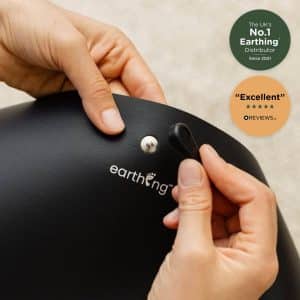
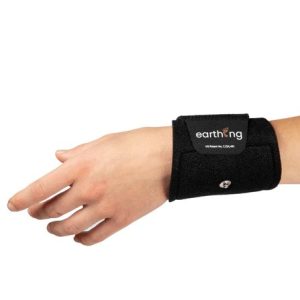
The solution is indoor Earthing. Grounding mats, mattress covers, desk mats, and wrist bands are all designed to replicate the connection you’d get from bare feet on the earth, by connecting to the earth wire in your home’s electrical socket. They allow you to ground yourself while you sleep, work, or relax indoors regardless of the weather or the season.
Sleeping grounded is considered one of the most effective ways to practise Earthing, simply because it means eight or more hours of continuous contact without any effort on your part. Many people notice improvements in sleep quality within the first few nights.
Surfaces that ground you:
✅ Grass (especially when damp)
✅ Soil and earth
✅ Sand (especially wet sand near the sea)
✅ Gravel and natural stone
✅ Concrete (unpainted, unsealed, laid directly on the Earth)
✅ Brick (unsealed)
✅ Natural bodies of water — sea, rivers, lakes
Surfaces that won’t ground you:
❌ Asphalt and tarmac
❌ Vinyl and rubber surfaces
❌ Wooden decking
❌ Carpets and rugs
❌ Wooden or laminate floors
❌ Painted or sealed concrete
❌ Glazed or sealed tiles
Yes, but only if the concrete is unpainted, unsealed, and laid directly on the Earth. Most modern concrete floors in UK homes are sealed, painted, or sit above a void. In which case they won’t conduct the Earth’s energy. Older concrete floors in garages, outbuildings, or ground-level utility rooms are more likely to be conductive. If you’re unsure, you can test conductivity with a multimeter.
Yes. Moisture significantly increases the conductivity of most natural surfaces, including grass, soil, and sand. Damp grass early in the morning when there’s dew, or after rain provides excellent grounding. That said, dry grass still grounds you; the connection is just slightly less efficient.
Standard swimming pools whether indoor or outdoor are not an effective grounding surface. The filtration chemicals and materials used in pool construction tend to disrupt conductivity. Natural bodies of water like the sea, rivers, and lakes are far more effective.
Damp grass, wet sand at the shoreline, and natural soil are among the most effective outdoor grounding surfaces. Bodies of water particularly the sea are also excellent. The key factors are natural material, direct skin contact, and ideally some moisture to enhance conductivity.
Indoor Earthing products are the answer. A grounding mat for your desk or floor, a mattress cover for your bed, or a wrist band are all designed to provide the same connection to the Earth’s electrons through the earth wire in your home’s electrical socket. They’re particularly valuable for people in flats, those with limited mobility, or anyone living somewhere with long or cold winters.
Any bare skin contact with a conductive surface will ground you whether that be standing, sitting, lying down, or walking. Some people find it relaxing to sit on the grass with their feet and hands touching the ground, which maximises skin contact and the flow of electrons. There’s no single right way to do it.
Tag: Learning